I recently attended a meeting at work held by a financial adviser. Even though my husband and I are already contributing to 401ks and Roth IRAs, I wanted to make sure there wasn’t anything new out there I wasn’t familiar with. There wasn’t. However, it made me happy to see many of my coworkers show interest in opening a Roth IRA. Until the meeting, many of them hadn’t realized the main benefit of a Roth IRA – the ability to withdraw contributions penalty free if necessary. Once they learned that, they realized it made more sense to grow their money in a Roth IRA than sticking it in a bank account which, on average, earns less than 1%.

This got me thinking. We as a society have failed at educating the public on how to properly handle their finances. Why is it that we take 12 years of general education courses, which include subjects that we may never use again, yet we do not have a mandatory course on personal finance? It should be taught in all high schools because it’s so very important. It’s something we all will deal with throughout our lives, and while learning other subjects helps make for a well-rounded individual (assuming the material is absorbed – how many people do you know who after 12 years of English courses still can’t spell or string together a coherent sentence?), properly handling one’s finances is a skill everyone needs. It doesn’t matter if you live paycheck to paycheck or make six figures (or more). Haven’t we all read stories of high-paid celebrities (or lottery winners) who are completely broke? How does that happen? Poor financial choices stemming for lack of knowledge, that’s how.

Every time I think about it, I feel frustrated. Imagine how many people wouldn’t be in the poor financial position they are today if they had been properly educated beforehand. Knowledge is power! People would be less stressed out if they felt financially secure. Sure, some people do everything right and they still struggle to make ends meet due to low paying jobs, lack of education (don’t even get me started on the cost of a college education and how much debt people start out with – that’s another post altogether), or medical issues which quickly rack up debt, but many people get themselves into trouble financially even though they are earning a very healthy income. They either spend more than they earn buying unnecessary things, dining out too much, or just budgeting poorly, or they don’t leave any room in their budget for contributing to retirement and savings, thus putting themselves at risk should their income disappear for any reason.

That’s another thing that bothers me – people who say, “I just plan to work until I die” because they either love to work, or they don’t feel they have any other option. But the harsh truth is that regardless of whether you want to work, there’s no guarantee you’ll be able to do so. You could get laid off and have trouble finding a new job, or become too ill to continue working. Better think about that now while you’re young enough to do something about it.

Another thing that worries me is how many people figure they’ll rely on social security when they retire. But look at the facts – social security is uncertain. I don’t believe it will be completely gone by the time I retire (could you imagine the ramifications???), but I do believe the predicted payments I’m seeing on my statements will have decreased by as much as 25% by that time. And even if they don’t, you really can’t live that well off social security alone. It would break my heart when I used to work in customer service for the cable company and an elderly person would literally start crying on the phone because their cable wasn’t working and it was all they had for entertainment due to living on a fixed income. I decided I didn’t want to end up in that situation which is one of the reasons why I’ve prioritized saving for the future. It’s just hard watching the people around me not do the same even though they have enough disposable income to go out to eat, attend events, etc. Priorities, people!

Remember: no one cares about your future as much as you should. Start planning now. Educate yourself about finance since our schools are failing us in that regard. I wish someone had stressed the importance of saving when I was in my early twenties. We didn’t really start saving until about a year before Joe and I were ready to buy a house. Luckily we were still young enough (27 for me, 34 for him) that time was still on our side, just not as much as it could have been.

While you should start saving now regardless of your age, if you’re very young I stress it even more. Because after 20+ years of working you may grow disillusioned with the whole concept and want out, but you won’t be able to afford it. You’ll be shackled to a lackluster existence because you didn’t plan ahead. Don’t let that happen. Educate yourself!

Share

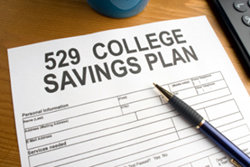
If you have children, you’ve probably started thinking about saving for college. How about a 529 plan? It’s a great tax savings seeing how you can invest money, let it grow, and be able to use the money and its gains tax free for educational expenses.

529 Plan

529 Plan vs A Regular Savings Account

Let’s walk through a possible scenario. Making it easy, let’s say you open two accounts, one 529 and one regular savings account with $10k each, make no additional contributions, and they grow for 16 years. Note: no estimate for annual account fees, etc, is in included here.

529
$10,000 initial contribution
0 additional contributions
7% interest (average stock market rate over the years)
$29,521 – value after 16 years (gain of $19,521)
-$1,952 – 10% penalty (on the gain of $19,521)
-$4,880 – 25% ordinary income tax on $19,521
$22,689 – final value (est w/o annual fees and such)

Savings Account
$10,000 initial contribution
0 additional contributions
1% interest rate (highest rate you’d find today)
$11,725 – final value after 16 years

What a difference! Know, though, the stock market isn’t consistent. The 7% is an average over decades of tracking. Which is good for long term investors because 7% is pretty good. But the market is still volatile. It may be in a low year when you need to pull the money for school. If you’re not going to use it for school, you can always leave it in the account until a good year comes up. There’s no time limit for leaving it in the account.

What if my child decides not to go to college?

This is the biggest concern most people have when contemplating opening up a 529 plan. There are alternatives, however!

  • The money can be transferred to another family member. You can even use the funds to go back to school yourself!
  • The money can be used for trade school instead.

Penalties if neither option above works

Worst case scenario there is no one to transfer the money to and your child doesn’t use it. In that case there would be a 10% penalty to pull the money out in addition to having to pay taxes on the gains made. The 10% penalty is only on the gains, not the entire amount in the account.

Keep in mind the tax part you would have to pay regardless of this or any investment in an ordinary account. So really, it’s just the 10% penalty you would incur for withdrawing for non-educational related purposes.

Penalty Example

Say the account increased in value by $5000 over the years and you withdraw the full amount. There will be a $500 tax penalty (10% of the $5000), leaving you with $4500 (will be a little less after brokerage company fees). You will be taxed at your current tax rate for the $5000. Say you’re in the 25% tax bracket, that means you’ll be taxed $1250 ($5000 x 25%). You’ll account for it when you do your taxes for that year.

Retirement first, then 529 plan

Before you think about opening a 529 plan, however, be sure you’re saving for retirement fully. If you already are, great. Keep going with it. Otherwise, start saving now before saving for your children. That’s selfish, right? Not really. Ask yourself this – do I want to be in a position where I HAVE to work after retirement age even if I don’t WANT to?

You can’t borrow for retirement, but your little one can borrow for college. If you’re not in a good place yourself with saving for retirement, you should take care of that first. Your child can always take loans and look for scholarships (there are tons out there, many of which go unclaimed) for college. And once you’re set up with a secure financial future you can always help your children pay off their loans.

Does anyone have any of their own experiences with college savings they’d like to share???

Share

It’s that time of the year again – time to receive your annual performance review. It’s a perfect time to take advantage of what will hopefully be an increase in your annual pay.

Why not take a % of the increase and move that to your 401k? After years throughout a career it could make the difference between retiring and not.

Let’s use an example of an employee who will receive a 3% increase on their annual merit. Why not take 1 or even 1.5% of that merit review and increase your 401k by that amount? It’s like a double bonus! You’ll receive more in your paychecks and at the same time you’ll be contributing more % to your 401k. That’s called a win-win!

Some employers have adopted an option where your 401k will automatically increase by x% each year based on your selection. It’s like the old adage, money burning a hole in your pocket. If you tuck it away before you have it, you won’t be tempted to use it.

Share

A new year brings a new opportunity to contribute to your Roth IRA. Not only for your 2015 contribution, either. You can still contribute to your 2014 Roth IRA until April 15th!

The annual contribution limit for 2014 and 2015 is $5,500 (and $6,500 if you’re over 50). Don’t fret if you don’t feel you don’t have enough to contribute to your Roth IRA – $5,500 is just the limit. Not everyone has the means to contribute that amount and that’s ok. Many brokerage firms will take monthly contributions of even $50 a month. No matter what amount you choose, it all adds up. And something is better than nothing.

My recommended strategy for contributing to your retirement accounts

In order to take full advantage of your retirement accounts, you should only put money into your Roth IRA after you have contributed to your 401k up to the company match. In other words, if your employer matches 3% of your 401k contribution, your best move would be to put 3% into your 401k, and the rest into your Roth IRA in order to make the most of the tax advantages. And if you have the means to do so, contribute the match into your 401k, contribute fully into your Roth IRA, and then go back and increase your 401k contributions even more.

It’s never too late to take advantage of the options out there. Many brokerage firms have a great selection of no-load or low-load funds to chose from. A couple of my favorites are Vanguard and Fidelity. Check them out – sooner is better than later!

Share

State_Farm

I don’t know why, but life insurance is a hot topic with some folks. Some strong opinions about what kind of life insurance is best, how much you should have, and what it’s intended use is.

There are two main types of insurance:

  • Term
  • Universal/Variable/Whole Life

Universal/Variable/Whole Life Insurance

Let’s talk about the universal/variable/whole life first. These combine an investment with insurance and they build cash value. I’ll be honest, I cringe when I hear someone mention they have one of these policies. If you want an investment vehicle, there are many other (much better) ways to do so. Investments should be kept separate from your life insurance needs.

Here are some of my thoughts around why I don’t care for whole life type policies. First, the benefit amount (when you die) is generally low and not enough to cover the amount you should have. Another reason is the fees involved. There’s a reason why insurance agents push this type of policy, they get some sweet commissions off of sales and the annual fees associated with administering the policy are high. When you run through and figure all the fees involved, your rate of return (which is low to begin with) is reduced even further.

In my opinion, you’re better off putting your money into a term policy for your life insurance needs. For investments, put your money in an investment account. With a little research you have a shot at better annual returns than that universal life policy. Remember, the stock market has a historical rate of return around 8% over the long term. Go ahead and try to find a policy that will give you that.

Term Life Insurance

Term is pretty straight forward, it’s just what the name implies. It’s in effect for a set period of time and only pays out in the event of death. It’s the simplest and cheapest form of life insurance you can buy. And the type of policy I would say everyone who should have life insurance should have. No, not everyone needs life insurance. We’ll get into that later.

How much?

As far as how much is a good amount of life insurance to carry there are several things to consider. Are you younger, older? Is your home paid for? Do you have a lot of financial obligations? For me it comes down to how much of an impact your missing income will be to the household. Generally, the younger and more obligations you have, your replacement should be higher. I shoot to be covered for 7-10 times my annual income. If my income were to disappear today, I want to ensure Nicole and the kids have enough to cover what my income would have been needed for. But maybe you’re retired, your home is paid for, your kids are financially independent and you have regular monthly income which would pass along survivor benefits. Probably not a big deal for those in that type of situation to even have life insurance.

Where to buy?

All of my coverage as well as Nicole’s comes through my employer. They have really good term rates for myself and spouse coverage. I price it out at open enrollment time every year and it’s a better deal than I can find elsewhere. That may not be the case for everyone so do your homework.

But there are plenty of places out there to shop including; State Farm, Progressive, AIG, USAA, Met Life and many many others. Personally, my first stop would be State Farm. I’ve had State Farm for insurance since I started driving and have the same agent to this day. We’ve priced it out a few times over the years. Sure, there are a few places who are a little cheaper. But to me State Farm is worth the few extra bucks. The times we’ve had to deal with them, it’s been really effortless on our part. Their help and follow-up has been great and they work to not make things an inconvenience to you. You’re damn right, I’ll pay the little extra for better customer service no matter what the industry.

Conclusion

You’ve heard me say it many times in other posts, do your homework. Check into the different types of coverage, ask a lot of questions and research a good insurance provider.

Disclaimer: I am in no way affiliated with State Farm, nor am I employed by them or compensated by them to publish content found on this site.

Share

rothIRA

I heard it mentioned somewhere on a show we were watching about someone looking into opening a Roth IRA for their (minor) child. This piqued my interest. Knowing the value of compounding interest and market performance over the long term could be huge, I decided to start doing a little research and thought I would share what I’ve found.

Keep in mind, as we’ve mentioned here on our about page, we’re not finance experts by any means; we’ve had no formal training or any certifications. Our writings are all based off of personal experiences. And don’t listen to me! Go do some research yourself. Google is a wonderful tool. Google-ize it! **I really should trademark that phrase**.

Like the Stones said, “time is on my side”!

Benefits
First, let us cover the benefits of opening a Roth IRA for your child and you!

Let’s assume a single $1,000 contribution is made when your child is 10 and nothing more is invested. Assuming a 5% rate of return, your child would have nearly $11,500 after 50 years. Yes, that many years! Remember, this is for retirement. Add a $50/month contribution starting after that initial $1,000 and your kid could have over $130k after 50 years. Talk about a little going a long way!

There’s a nice side benefit if you include your child on what you’re doing as well – you’re teaching them the importance of investing and saving for retirement. And being able to hand this off to them as they get older and can take over contributions for their future? Priceless!

And remember – With a Roth IRA, contributions can be withdrawn at any time without penalty.

Rules
Of course there are rules. The maximum limit applies to the child just as it does to an adult: $5,500 for 2014. Your child can contribute all income up to the $5,500 annual limit. For example, if your child earns $2,000, they can contribute just up to the $2,000. Likewise, if they earn $12,000, they are limited to the annual amount of $5,500.

Of course, there’s a stipulation and it’s this – the money put in the account has to qualify as income. It’s easier when one has a W2. However, income from mowing lawns or babysitting also qualifies. If there’s no W2, do yourself a favor and document it really well. How much was paid, who for (if you’re adding to more than one child’s Roth IRA), how long, what type of work, etc. And it should be realistic; you wouldn’t pay your kid $200 to mow the lawn for an hour.

The custodial account will have to be opened by you since they are a minor. Not a big deal, just be aware you’ll need to provide info on yourself as well.

What’s next?
In my opinion, it’s a great opportunity to get your child on the road to having a financially secure retirement. We all have examples of could haves and should haves. This is a good opportunity if you have children too young to start contributing on their own. And if you have young adult children now is a good time to encourage them to start putting money aside for retirement. Roth IRAs are quick to set up online with any of the major financial institutions. Many can be started with as little as $100. Putting a little away each month will add up because time is on their side!

Share

Budgets

I can’t stress enough the importance of doing a monthly budget, regardless of your income, and also computing your net worth month over month. How else do you know if you’re on track for long term goals or just want to make sure you’re not spending more than you’re bringing in?

We budget everything each month, and I do mean everything. With things are as tight as they are today, we need to stay on track and make sure we’re not increasing our debt. Every dollar counts!

Budgets can be pretty simple or really detailed. The good thing is it’s easy to start out and add more detail month to month if you want. If you have Excel, a little work up front will help make putting a budget together pretty easy.

In its simplest form a budget is a forecast. You calculate your income and subtract all expenses. Bingo, you’re done. Hopefully there’s a positive number at the end. If it’s negative, you’re spending more than you’re bringing in and your debt will grow. If you want to stay out or get out of debt, then changes need to be made.

Budget example:

Total Income = $1000

Expenses

    Rent $500
    Electric $75
    Cable $82
    Gas $65

Total Expenses = $722

Balance = $278

Not sure where you stand each month with your expenses? An easy way to figure it out is to use a credit card for the month to capture all expenses. Of course, as long as you can pay it off right away. No need to unnecessarily carry a balance and get hit with finance charges.

A budget helps with planning for one-time expenses too. A family vacation on the horizon? Maybe driving school for a new driver? Plugging that into your budget will help ensure you can cover these one-time expenses.

Net Worth

You may be asking yourself, why should I be interested in my net worth? Well, a couple of good reasons. Maybe you’ll be looking to get a loan for a car or a mortgage or have long term goals to retire someday and not work as much or at all. Tracking your net worth will tell you how well you’re doing. It’s an eye opening experience tracking your net worth month over month. Sometimes it’s not pretty, but it’s good to know where you stand.

Where a budget is somewhat of a forecast, net worth is actual. In short, it’s your assets minus your debts.

Net Worth example:

Assets

    Home $150,000
    Retirement $12,500
    Savings $3,000
    Checking $1,250

Total Assets = $166,750

Debts

    Mortgage $12,2000
    Credit Cards $2,200
    School Loan $23,000
    Auto Loan $9,800

Total Debts = $157,000

Net Worth (Assets – Debts) = $9,750

Even if your net worth isn’t a positive number. Don’t stress. You’re taking the first step in fixing it just by tracking your net worth. Now you can put a plan in action to turn it around!

In Conclusion

I challenge you to do a budget if you’re not doing one already, plan one out just a month or two. Track your expenses, this is huge. I have friends who did this and were amazed to find out how much they spend eating out. They weren’t tracking it before and now realize how quickly it adds up.

At the end of the month, update your budget with actual ending numbers so you can see if your budget was in line. Then do a net worth calculation. Month after month you’ll see you become somewhat addicted in finding out if you’ve made progress. And you can measure any changes you’ve made to see the impact.

We’re not financial experts, just sharing some things that have helped us out. But we’re willing to help. If you have questions, feel free to shoot us an email via the CONTACT US link and we’re more than happy to give our $.02 🙂

Share

I just love a good deal! And I don’t mean “I love spending money on something I wouldn’t have otherwise bought just because it’s on sale” because that is not saving money, that is spending it. I’m referring, instead, to when there’s something you’re planning on buying anyway (whether you need it or just have wanted it for a long time) and you’re able to get a discount on it.

I’m a big fan on stocking up on everyday items when they go on sale but I like to stick to non-perishables like toilet paper, laundry soap, garbage bags, etc. as nothing irks me more than to waste food. So when it comes to food, unless it’s canned items that have a shelf life of over a year, I am careful not to stock up too much. But with other stuff I really go whole hog. For instance, last year Target had our preferred toilet paper on sale. In addition to the sale they were giving out $5 gift cards for every two packages of toilet paper sold and there was a “save $2 now” coupon attached to each package. In all we saved approximately $7 per package of toilet paper and we’re still working through our supply of it well over six months later. Sure, we spent a lot of money at once to acquire it but that’s an expense we’re not going to see again for quite awhile. These are my favorite type of savings because they are on things I would have bought anyway so it’s a win-win.

For things that one wants, such as a new TV, it’s not as exciting because it’s still money out the door that could easily have stayed in your pocket. For those such instances you need to weigh whether you can truly afford it (hint: if you’re buying it with a credit card that doesn’t get paid off in full at the end of each month then you shouldn’t get it), how long it will last, and how much enjoyment you’ll get out of it. Certain items can be considered an investment, such as a new suit to wear on interviews and/or special events, whereas others are pure enjoyment – that new smart TV you’ve been drooling over. There’s nothing wrong with buying stuff you want (and really don’t need) as long as you’re realistic and smart about it; just do your research! Amazon.com is fantastic for reviews even if you decide to buy it elsewhere. Camelcamelcamel.com tracks items sold at Amazon, Best Buy and NewEgg and provides a price history as well as allow you to set a price threshold and get notified by email when it has been reached. You can read more about CamelCamelCamel here.

I also highly recommend the wait and see approach. Many times when someone wants something they want it right away and thus end up spending more money than if they had been patient for awhile and waited for it to go down in price via a sale or temporary price cut. The added bonus here is that the anticipation sweetens the feeling when the item is eventually acquired.

In addition, try practicing feeling grateful for the things you already own. Just because you don’t have the latest, greatest device doesn’t mean it’s worthless. Too often people take their possessions for granted which results in them constantly wanting to acquire new ones to get that happy feeling again. But that initial feeling is fleeting, so if you train yourself to appreciate the things you have you’ll find yourself enjoying them more and spending less money at the same time. Before you know it you’ll have accumulated extra money in your savings account which gives you a peace of mind that trumps that high you get when you buy something new.

Try it, and feel free to share your strategies in the comments.

Share